
Because recovery is not only about surviving treatment. It is about rebuilding life with strength, dignity, and support.
“Whole-person healing means we do not ask a woman to recover one piece at a time. We support the body, the mind, the home, the family, and the future she is trying to rebuild.”
Introduction
When breast cancer treatment begins, the focus is often immediate and medical.
Appointments. Surgery. Chemotherapy. Radiation. Medication. Scans. Bloodwork. Side effects. Decisions that feel too big and too fast.
Wendy B., a breast cancer survivor supported by Pawsitively 4 Pink, remembers that speed. “I remember how quickly everything changed,” she says of her diagnosis. “You hear the words ‘you have breast cancer,’ and suddenly your mind goes in a hundred different directions. There was fear, disbelief, and so many questions about what was going to happen next.”
That medical care matters deeply. It is essential. But at Pawsitively 4 Pink, we also know that breast cancer affects far more than the body.
It affects a woman’s energy. Her confidence. Her finances. Her family. Her appetite. Her sleep. Her relationships. Her emotions. Her ability to work. Her sense of safety. Her trust in her own body.
That is why whole-person healing matters.
Whole-person healing is the understanding that recovery after breast cancer is not just about removing disease or finishing treatment. It is about helping a woman rebuild her life in a way that honors everything she has been through.
It does not replace medical care. It supports the whole human being receiving that care.

What Does Whole-Person Healing Mean?
Whole-person healing looks at the full picture of recovery.
It asks better questions than, “Is treatment over?”
It asks:
- Does she have enough food in the house?
- Can she get to appointments?
- Is she sleeping?
- Does she feel safe in her body?
- Is fear of recurrence keeping her from resting?
- Does she have emotional support?
- Can she afford rent, utilities, transportation, or groceries?
- Does she know what nourishment, movement, and support can look like in this season?
The National Cancer Institute’s survivorship resources describe survivorship as beginning at diagnosis and continuing through the rest of life. That matters because a woman does not suddenly stop needing support when treatment ends or when the calendar says she should be “back to normal.”
Wendy names the same gap from the inside. “One of the hardest things was realizing that even though I was dealing with breast cancer, all of my regular bills and responsibilities were still there,” she says. “Rent still had to be paid. I still needed my car and had to keep it insured. I still needed groceries and everyday essentials. You’re supposed to be concentrating on getting better, but instead you’re also worrying about how you’re going to keep a roof over your head and make ends meet.”
For many women, healing continues in layers.
Physical healing. Emotional healing. Financial recovery. Family adjustment. Nutrition. Movement. Confidence. Hope.
Whole-person healing makes room for all of it.
What Whole-Person Healing Is Not
Because the word “holistic” is sometimes misunderstood, it is important to be clear.
Whole-person healing is not telling women to replace medical treatment with lifestyle advice.
It is not blaming someone for being sick.
It is not asking a woman to stay positive all the time.
It is not pretending vegetables, yoga, journaling, prayer, therapy, or community support can erase the reality of cancer.
Whole-person healing is support, not pressure.
It works best when it stands beside medical care and helps women care for the parts of life that medical treatment alone cannot carry.
The Five Parts of Whole-Person Healing
Every woman’s experience is different, but whole-person support often includes five connected areas.
| Area of Healing | What It Can Include | Why It Matters |
| Physical Recovery | Fatigue, pain, strength, sleep, movement, follow-up care, side effects, body changes. | The body has been through a major experience and may need time, patience, and coordinated support. |
| Emotional Healing | Fear, grief, anxiety, anger, body image, identity, relationships, and uncertainty. | Many women continue processing the emotional weight of breast cancer long after treatment ends. |
| Nourishment | Food, hydration, nutrition education, rebuilding energy, reducing shame around eating, and realistic routines. | Nutrition can support strength, energy, and quality of life, especially when delivered with compassion rather than judgment. |
| Practical Stability | Housing, utilities, transportation, groceries, work disruption, childcare, and essential expenses. | Healing is harder when a woman is worried about losing her home, missing treatment, or feeding her family. |
| Community and Meaning | Support groups, trusted friends, family communication, spiritual care, purpose, and feeling seen. | No woman should have to rebuild her life in isolation. |
1. Physical Healing: The Body Needs Time
After breast cancer treatment, some people expect the body to bounce back quickly.But recovery is not always immediate. Fatigue can linger. Scars may change how a woman feels in her body. Sleep may be disrupted. Strength may need to be rebuilt slowly. Follow-up appointments can bring anxiety. Hormonal changes, medication side effects, or pain may affect daily life.
The American Cancer Society’s guidance on life after cancer notes that adjusting after treatment can involve complicated emotions, fear of recurrence, relationship changes, body image concerns, and the need for support.
Wendy describes what that stretch actually contains. Even after treatment ends, she says, “there can still be fear, exhaustion, financial stress, appointments, and the worry about what comes next.” Whole-person healing respects the body instead of rushing it. It says: move gently when you are able. Rest when you need to. Ask your care team about symptoms. Do not compare your recovery to anyone else’s timeline. Healing is not a performance.
2. Emotional Healing: The Feelings Deserve Care, Too
Breast cancer can be emotionally exhausting. Some women feel fear. Some feel anger. Some feel gratitude and grief at the same time. Some feel pressure to be inspiring. Some feel guilty for not feeling happier when treatment is over.All of those feelings deserve care.
One of the most common experiences women describe to us is the expectation that the story ends when treatment does. Wendy puts it plainly: “I think people expect you to go back to normal once treatment is over. But you don’t just pick up exactly where you left off. Cancer changes you, and finding your way forward takes time.”
We hear a version of that in almost every conversation. The woman who sat in a doctor’s office and heard the words. The woman who went home that night and wondered how she was going to tell her children. The woman who was trying to recover from surgery while worrying about whether the rent was going to be paid. The woman who finished treatment only to discover that everyone around her thought life should simply go back to normal.
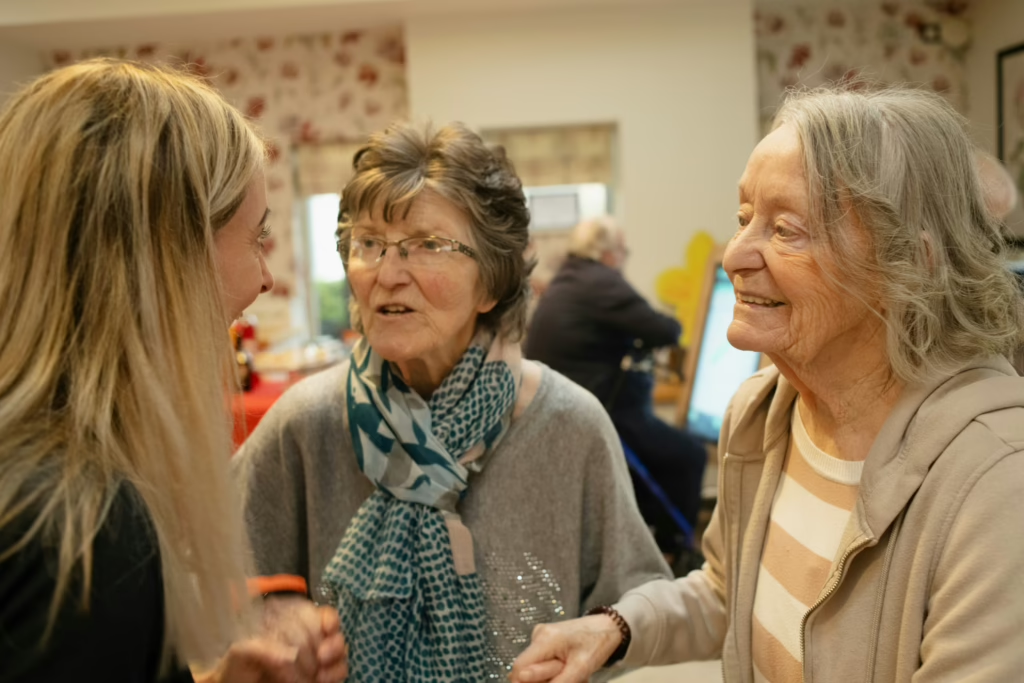
Whole-person healing recognizes that emotional recovery is not a side issue. It is part of survivorship. Support may include counseling, peer support, spiritual care, journaling, honest conversations, support groups, or simply having someone say, “You do not have to pretend with me.” For P4P, this matters because breast cancer is not only a diagnosis on paper. It is an experience that can shake a woman’s confidence, relationships, identity, and sense of safety. Emotional healing helps women feel less alone inside that experience.
3. Nourishment: Food Should Support Healing, Not Create Shame
Nutrition can be an important part of recovery, but it should never become another source of fear or pressure.
After treatment, many women want to know what to eat, how to rebuild energy, how to support digestion, and how to make healthy choices when they are tired or overwhelmed.
The American Cancer Society’s nutrition and physical activity resources explain that eating well and staying active during and after cancer treatment can support energy, quality of life, and overall wellbeing, while also acknowledging that side effects and fatigue can make this difficult.
There is also a step that comes before any nutrition plan: being able to buy the food. For some women, nourishment starts with a grocery gift card that means they can fill the refrigerator without checking a bank balance first. Wendy remembers the relief of being able to “go to the store and buy groceries and the things you need.” A meal plan is only useful when the pantry is reachable.
That is the heart of compassionate nutrition: helpful, realistic, and judgment-free.
Pawsitively 4 Pink created Nutrition for Healing with Sanara Wellness because women deserve support that is practical and kind. The program helps women learn how whole-food nutrition, gentle lifestyle strategies, and encouragement can support recovery without shame, extremes, or overwhelm.
This is where experts like Tieva and Malory bring important perspective. Nutrition is not about perfection. It is about rebuilding trust with the body, creating realistic routines, and helping women feel informed and supported.


4. Movement: Strength Can Return Slowly
Movement after breast cancer does not have to mean intense exercise.
For some women, it may begin with stretching. A short walk. Breathing exercises. Physical therapy. Gentle yoga. Walking to the mailbox. Standing up during the day. Rebuilding strength one small step at a time.
The American Cancer Society’s physical activity guidance notes that, for most people, physical activity can be safe and helpful before, during, and after cancer treatment, but women should talk with their healthcare team about what is appropriate for their situation.
Whole-person healing does not push a woman to do more than her body is ready for.
It invites her to rebuild strength gently, with medical guidance and self-compassion.
5. Practical Stability: Healing Needs a Foundation
It is hard to focus on healing when rent is due.
It is hard to rest when utilities are at risk.
It is hard to recover when transportation, groceries, childcare, or work disruption are creating constant stress.
This is the piece of breast cancer support that is too often overlooked.
Whole-person healing includes practical stability because real life does not pause for treatment.
Hope does not always arrive as a single life-changing moment. Sometimes hope is six months of rent. Sometimes it is knowing your car insurance is paid so you can get to treatment. Sometimes it is a gift card that means groceries are covered this week. These things can look ordinary from the outside. When cancer has turned a woman’s life upside down, ordinary can mean everything.
Pawsitively 4 Pink’s Power to Thrive Program exists to help women with breast cancer stabilize their lives so they can focus on healing. P4P’s Apply for Assistance page explains that support may include help with housing, transportation, pet care, medical-related expenses, and emotional support programs.
This is also where financial professionals and community advocates can make a difference. Someone like Flavia,with financial expertise, helps remind us that stability is not separate from wellness. For many women, stability is what makes healing possible.

What Whole-Person Support Made Possible for Wendy
Wendy’s experience shows what practical stability looks like in real numbers.
Pawsitively 4 Pink paid her rent for six months, paid off her car insurance, and provided Walmart gift cards for groceries and everyday essentials.
“Those may sound like everyday things,” she says, “but when you’re going through breast cancer and struggling financially, they are huge. For six months, I knew I had a roof over my head. I knew I could keep my car on the road. I knew I could buy groceries and the things I needed.”
What she describes next is exactly what whole-person healing is for. “P4P gave me something that is hard to put a price on during cancer treatment — a little bit of stability and the chance to focus on getting through what was in front of me instead of constantly worrying about the next bill.”
Ask Wendy what support helped her breathe again and she does not name a single dramatic gesture. She names the removal of weight. “When you know your rent is covered, your car insurance is paid, and you can go to the store and buy groceries and the things you need, you can finally breathe a little easier. It gave me the ability to put more of my energy toward taking care of myself.”
That is the whole point. Support that takes items off the list so a woman can put her energy where it belongs — on herself, her treatment, and her family.
Why This Matters for Families and Caregivers
Whole-person healing is not only for the woman diagnosed. It helps families understand what support can look like.
A caregiver may not be able to change the diagnosis, but they can help protect the conditions that make healing easier.
- Bring food that is easy to reheat.
- Offer rides to treatment or follow-up appointments.
- Help organize bills, paperwork, or resources.
- Listen without trying to fix every feeling.
- Encourage rest without making her feel weak.
- Ask what kind of support feels helpful today.
Support does not have to be dramatic to matter. Often, the most meaningful support is steady, practical, and respectful.
It also helps to know that many women have never had to ask for help before, and asking is its own hurdle. Wendy’s advice to a woman just beginning this journey speaks to both sides of that moment: “Don’t be afraid to ask for help, and when someone offers it, let them help you. You don’t have to carry everything by yourself. There are going to be good days and really difficult days. Just keep putting one foot in front of the other and know there are people who truly want to walk beside you.”
How Pawsitively 4 Pink Supports Whole-Person Healing
P4P’s mission has always been rooted in the real-life needs of women facing breast cancer.
That includes financial assistance. Nutrition education. Emotional encouragement. Community support. Practical resources. Dignity. Stability. Hope.
As a nonprofit, we track numbers. How many women we have helped. How many months of rent we have paid. How many utility shutoffs we have prevented. How much assistance we have provided for groceries, transportation, and everyday expenses. But numbers have never been our favorite part of the story, because we do not see numbers. We see women.
That is why P4P has always believed in going deeper, not wider.
We want to know the woman behind the application. What is keeping her awake at night? What would give her a little breathing room? What can we take off her plate? And the story does not end when treatment does. Survivorship brings its own challenges — fear of recurrence, financial recovery, changes to the body, shifts in relationships and identity, and the strange expectation that because treatment is over, everything should be fine again. We want women to know that we see that part of the story, too.
Through programs such as Power to Thrive and Nutrition for Healing, P4P helps women address the parts of recovery that often happen outside the hospital walls.
Because whole-person healing asks a different question.
Not only, “Did she finish treatment?”
But also, “Does she have what she needs to live, recover, and feel supported?”
Every story is different. And every story matters.
A Message from Michelle
When I think about whole-person healing, I think about the women we have met who were doing everything they could to survive while quietly carrying the weight of everyday life.
They were making medical decisions, managing fear, showing up for families, trying to work, trying to rest, trying to heal, and still wondering how the bills would get paid.
That is why Pawsitively 4 Pink exists.
We believe a woman deserves support for more than one part of her journey. She deserves care that sees her whole life.
Her body.
Her mind.
Her home.
Her family.
Her future.
Whole-person healing is not about doing recovery perfectly. It is about being surrounded by the right support while you find your way forward.
I think about how Wendy defines hope now, after everything: “Hope means continuing to move forward. It doesn’t mean that I’m never afraid or that everything suddenly becomes easy. It means appreciating where I am today, taking things one day at a time, and believing there are still good things ahead.”
Hope lives here because women are seen here. They are heard here. And they are cared for here.
With love,
Michelle Power, LMHC
Founder & CEO
Pawsitively 4 Pink
If you or someone you love is navigating breast cancer treatment or recovery, Pawsitively 4 Pink is here to help.
Learn more about Nutrition for Healing, explore the Power to Thrive Program, or visit our Resources page for support.
Because healing is not only medical. It is physical, emotional, practical, and deeply human.
Frequently Asked Questions
What is whole-person healing after breast cancer?
Whole-person healing means supporting the physical, emotional, nutritional, practical, relational, and financial needs that can arise during and after breast cancer treatment.
Does whole-person healing replace medical care?
No. Whole-person healing does not replace medical care. It supports the whole person receiving medical care and should work alongside guidance from a healthcare team.
What does whole-person support actually look like in practice?
It looks different for every woman, because it starts with her situation rather than a fixed package. For Wendy B., a survivor supported by P4P, it meant six months of rent, her car insurance paid off, and gift cards for groceries and essentials — support that let her put her energy toward treatment instead of the next bill.
Why is emotional healing important after breast cancer?
Many women experience fear, grief, anxiety, body image changes, relationship shifts, or uncertainty after diagnosis and treatment. Emotional support helps women process those changes without feeling alone.
Does support end when treatment ends?
It should not. Survivorship begins at diagnosis and continues for the rest of a woman’s life. Fear of recurrence, exhaustion, financial recovery, ongoing appointments, and changes to identity and relationships can all continue long after the last treatment date.
Can nutrition support recovery after breast cancer?
Nutrition can support strength, energy, and overall wellbeing, but it should be realistic and individualized. Women should talk with their healthcare team before making major dietary changes.
What kind of practical support might women need?
Women may need help with housing, utilities, groceries, transportation, childcare, pet care, medical-related expenses, and other everyday needs that continue during treatment and recovery.
Where can women in Massachusetts find support?
Women in Massachusetts facing breast cancer-related financial hardship can explore Pawsitively 4 Pink’s Apply for Assistance page, Power to Thrive Program, and Nutrition for Healing.
Medical Disclaimer
This article is intended for educational and informational purposes only and should not be considered medical, nutrition, mental health, legal, or financial advice. Every person’s experience with breast cancer is unique. Always consult a physician, oncology team, registered dietitian, qualified healthcare provider, or licensed mental health professional regarding questions about diagnosis, treatment, nutrition, movement, recovery, or emotional wellbeing.
References
- National Cancer Institute: Cancer Survivorship
- American Cancer Society: Life After Cancer
- American Cancer Society: Nutrition and Physical Activity During and After Cancer Treatment
- American Cancer Society: Physical Activity When You Have Cancer
- Pawsitively 4 Pink: Nutrition for Healing
- Pawsitively 4 Pink: Power to Thrive Program
- Pawsitively 4 Pink: Apply for Assistance
- Pawsitively 4 Pink: Board Members